

Offroad League Online: Multiplayer Off-Road Racing and Demanding Terrain
Offroad League Online stands out in the mobile racing segment by focusing on technical driving, realistic terrain interaction, and competitive multiplayer modes. Unlike traditional arcade racers, it challenges players to manage traction, suspension behaviour, and route selection across mud, rocks, and steep gradients. By 2026, the game continues to evolve with updated physics, expanded maps, and more structured online competition, making it relevant for players looking for skill-based progression rather than casual racing.
Core Gameplay Mechanics and Driving Physics
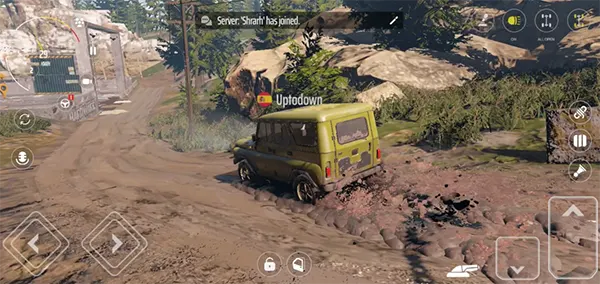
The defining feature of Offroad League Online is its physics-driven gameplay. Vehicles react dynamically to terrain types, meaning that driving through mud requires a completely different approach compared to rocky slopes or sand. Players must control acceleration carefully to avoid wheel spin, while also maintaining momentum on uneven surfaces. This creates a slower, more tactical pace than typical racing games.
Vehicle handling is influenced by several parameters, including tyre grip, suspension travel, and weight distribution. Each vehicle category behaves differently, from lightweight buggies that excel on loose terrain to heavy trucks designed for torque and stability. This diversity adds depth, as players need to select the right vehicle for each track rather than relying on a single setup.
Environmental factors also play a role. Weather conditions such as rain can alter traction levels, while dynamic terrain deformation means that repeated driving lines can create deeper ruts. These elements make each race feel less predictable and reward players who adapt quickly.
Vehicle Customisation and Performance Tuning
Customisation in Offroad League Online goes beyond visual upgrades. Players can modify suspension stiffness, tyre types, gear ratios, and engine output. These adjustments directly impact how a vehicle performs under different conditions, allowing for fine-tuned setups tailored to specific tracks.
Progression systems reward players with upgrade parts and in-game currency, which can be invested into improving vehicle performance. However, upgrades alone do not guarantee success. A poorly configured vehicle can become harder to control, especially on technical sections of a track.
By 2026, the game includes preset configurations for beginners alongside advanced tuning options for experienced players. This ensures accessibility while still offering depth for those who want to experiment with detailed setups.
Multiplayer Modes and Competitive Structure
Multiplayer is central to Offroad League Online. Players can compete in real-time races against others worldwide, with matchmaking systems pairing participants based on skill level and vehicle performance. This helps maintain balanced competition and reduces the gap between new and experienced players.
Ranked modes introduce a progression ladder where performance directly affects a player’s rating. Seasonal resets keep the competition active, encouraging regular participation. Leaderboards highlight top performers, adding a competitive edge for those aiming to improve their standing.
Cooperative events also play a role, allowing players to complete challenges together. These modes often focus on endurance or obstacle-based objectives rather than speed alone, reinforcing the game’s emphasis on control and coordination.
Event Design and Track Variety
Tracks in Offroad League Online are designed to test different aspects of driving skill. Some focus on steep climbs requiring torque management, while others include narrow paths where precision steering is essential. This variety prevents repetition and encourages players to adapt their strategies.
Time-limited events introduce unique conditions, such as restricted vehicle classes or extreme weather scenarios. These challenges keep the gameplay fresh and often provide exclusive rewards, motivating players to participate regularly.
Community feedback has influenced track design updates in recent years. Developers have adjusted difficulty curves and added alternative routes within tracks, giving players more strategic options rather than forcing a single optimal path.
Technical Performance and Mobile Optimisation
Offroad League Online has been optimised for a wide range of mobile devices, ensuring stable performance even on mid-range hardware. Graphics settings can be adjusted to balance visual quality and frame rate, which is particularly important in multiplayer races where responsiveness affects outcomes.
The game uses efficient network synchronisation to minimise latency during online matches. While occasional connection issues can still occur, updates released through 2025 and 2026 have improved stability, especially in regions with weaker network infrastructure.
Battery consumption remains moderate compared to other 3D racing titles. This makes longer play sessions feasible without excessive drain, which is a practical advantage for mobile users.
Updates, Community Support, and Future Development
Regular updates are a key part of the game’s lifecycle. Developers continue to introduce new vehicles, tracks, and gameplay adjustments based on user feedback. Patch notes typically address balance issues, physics tweaks, and bug fixes, reflecting an ongoing commitment to refinement.
The player community contributes through forums and social channels, sharing tuning setups, race strategies, and feedback on new features. This exchange of information helps new players improve while also guiding future development priorities.
Looking ahead, planned features for 2026 include expanded competitive leagues and enhanced replay systems. These additions aim to strengthen the game’s position within the mobile racing genre by offering more structured competition and better tools for performance analysis.